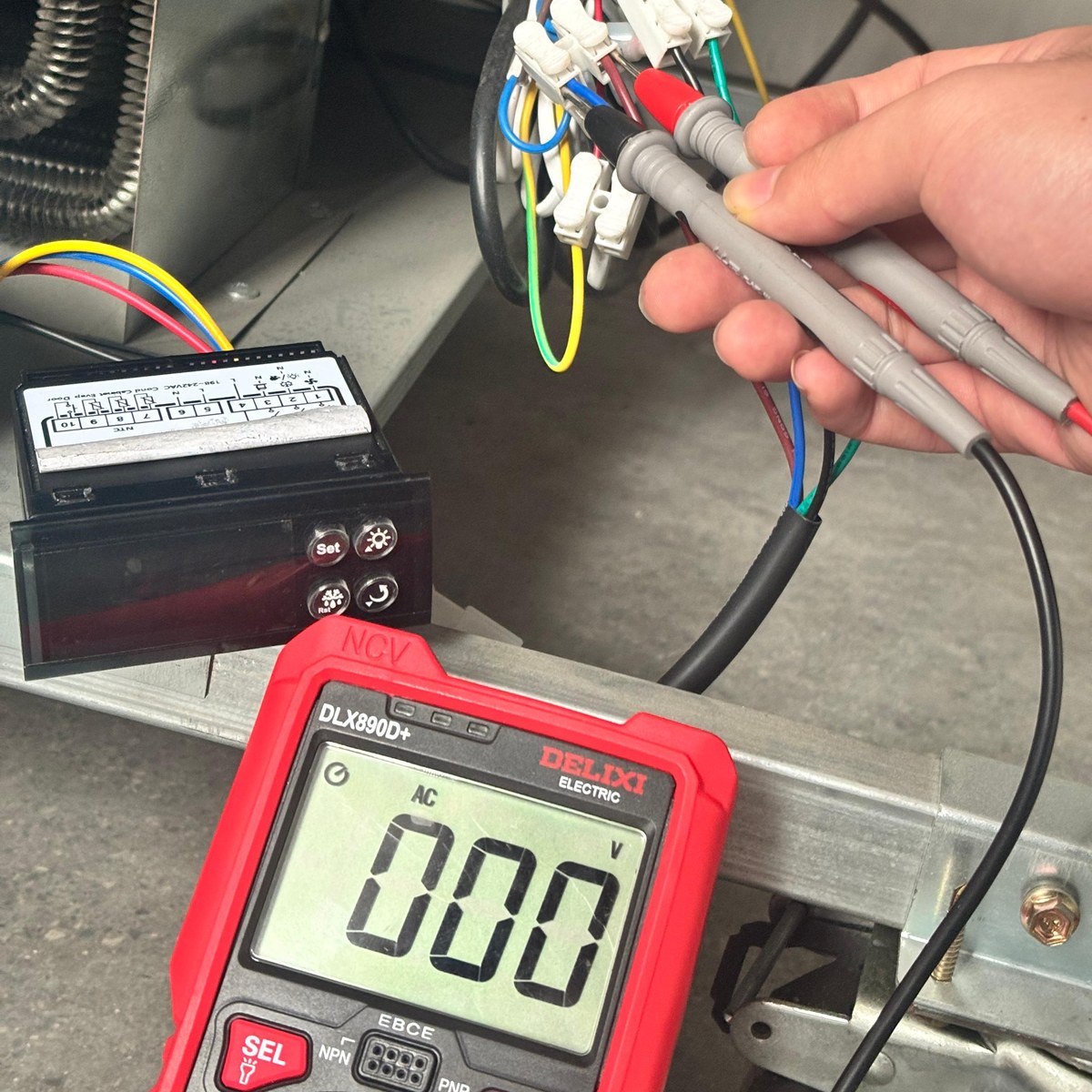
The temperature controller is the core component of a commercial refrigeration cabinet. When a cabinet is not cooling, the fault can be in the compressor, the refrigeration system — or in the controller itself. This guide helps you locate the problem step by step, and tells you whether each step means adjusting a setting, replacing a sensor, or replacing the controller.
Step 1 — Locate the problem: which part is at fault?
Look at the compressor and the condenser fan.
- If the compressor is hot but not running, while the fan is running: the problem is likely in the compressor or the refrigeration system (for example, an ice blockage). The controller is not at fault.
- If both the compressor and the fan are off, and the compressor is cold: the controller is probably not sending an output signal. The fault is in the controller.
Step 2 — Once the controller is the suspect, check three areas
1. Parameters — can be adjusted (free)
- Defrost starts but ice never melts: check the defrost mode (electric heater, hot gas, or off-cycle), the defrost interval, and the duration. Many faults are wrong settings, not controller failures.
- Controller behaves abnormally after a parameter change: internal parameters may have been changed by mistake. Most controllers have a factory reset function — check the manual or contact your supplier, then re-enter the correct parameters.
2. NTC sensor — can be replaced (low cost)
- Temperature display is wrong, or an error code (E1/E2) appears: the most common cause is a damaged external NTC probe. A broken probe or cable makes the controller show a fault code (E1 = sensor open, E2 = sensor short).
- Quick test: put the probe in ice water (0°C). The display should show close to 0°C (or 32°F). If it is far off, replace the probe.
3. Controller internal fault — replace the controller
- If the checks above do not solve the problem, the controller itself may have an internal fault (for example, a burned relay).
- A new controller is the reliable fix in this case.
What to do next
When you order a new batch, send us the failed unit's photos and settings. We can often identify the root cause and recommend the right model or a stronger relay, so the same problem does not come back.