For fixed-frequency refrigeration, the compressor turns on and off based on the set temperature plus a temperature band called hysteresis (or differential). Get this parameter right and the cabinet runs stable and efficient. Get it wrong and you get either wide temperature swings or a compressor that cycles itself to death.
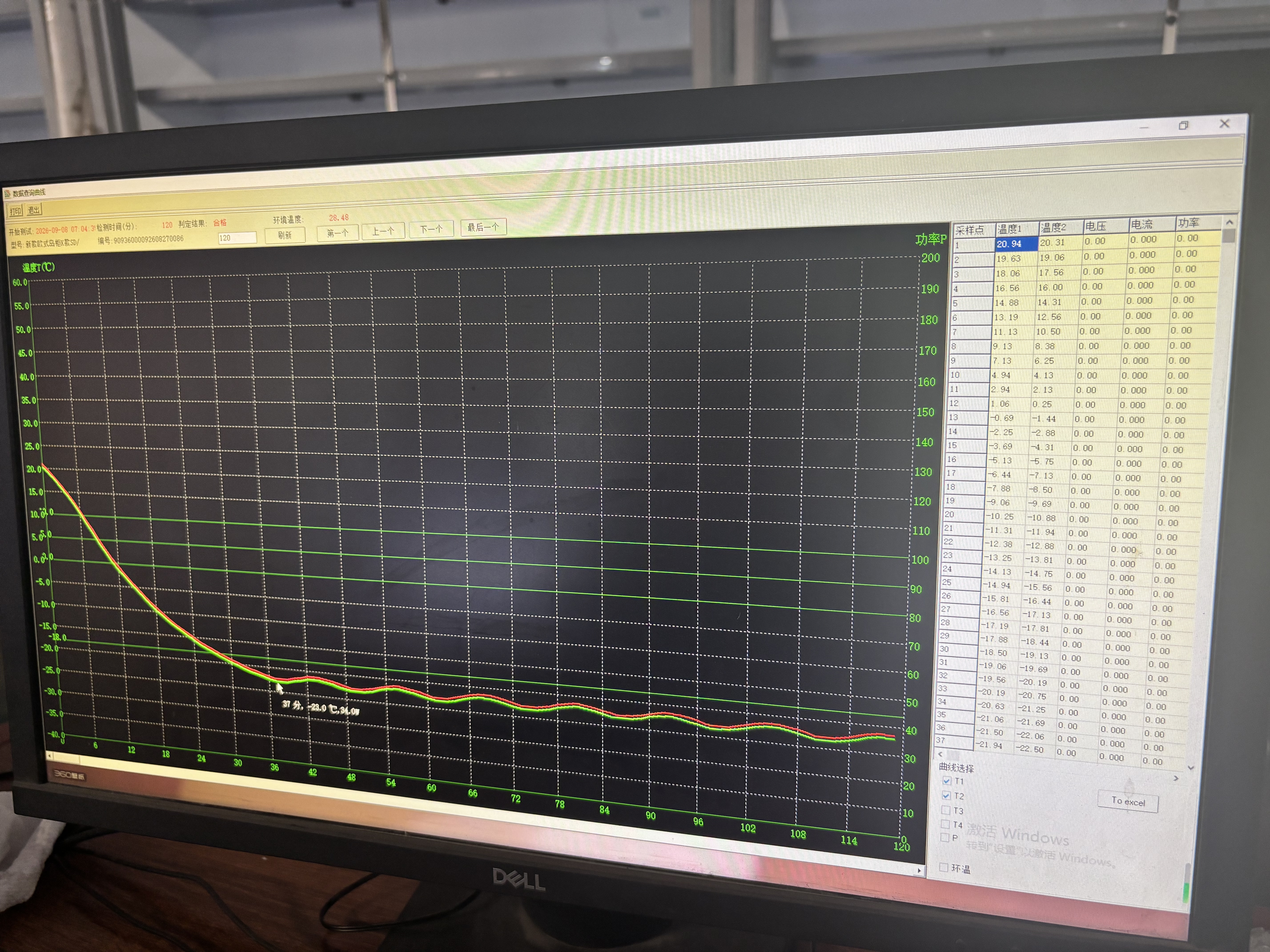
The Trade-off
A smaller hysteresis keeps the inside temperature in a narrower band — good for product quality, but the compressor starts and stops more often. Each start draws 5–7 times running current, so frequent cycling means higher energy use and shorter compressor life.
A larger hysteresis reduces cycling and saves energy, but the cabinet temperature drifts further between cycles. For most foods this is fine; for sensitive products it isn't.
How to Choose by Application
| Application | Recommended Hysteresis | Why |
|---|---|---|
| Frozen meat, fish, seafood | 5–10°C | High specific heat capacity; a brief temperature rise to −15°C from a −25°C setpoint won't harm the product |
| Ice cream | 2–4°C | Ice cream texture degrades quickly with temperature swings; accept more cycling to protect product quality |
| Beverage coolers | 3–5°C | Moderate band; drinks tolerate wider swings than ice cream |
| Fresh food display | 2–3°C | Sensitive products; tighter control needed |
Worked Example
Target temperature −25°C, hysteresis 10°C:
- Compressor starts when cabinet reaches −15°C
- Compressor stops when cabinet drops back to −25°C
- The 10°C band protects the compressor while keeping frozen product well below its storage limit
For ice cream at −25°C with hysteresis 3°C, the compressor starts at −22°C and stops at −25°C — more cycling, but the ice cream stays smooth.
One Parameter, Three Outcomes
Hysteresis is the single parameter that trades off product freshness, energy cost, and compressor lifetime. There is no universal best value — it depends on what you're storing and how much cabinet volume you have.
Our controllers ship with pre-tuned defaults for common applications, and can be adjusted on-site through the front panel. If you're building a new line, send us your product and cabinet specs — we'll recommend a starting parameter set based on our field data.